
Species Profile: Tufted Titmouse (Baeolophus bicolor)
The Tufted Titmouse is one of the most recognizable backyard birds in the eastern United States. With its pointed crest, large dark eye, soft gray color, and peachy wash along the sides, it has a look that is both neat and expressive. This small songbird is common in woodlands, parks, and suburban yards, and it is a steady visitor at feeders.
If you watch a Tufted Titmouse at a feeder, you will often see it grab a single seed and fly off to a nearby perch. There it may hold the seed with its feet and crack it open with its stout bill. In fall and winter, Tufted Titmice also store food for later use, a habit that helps them through colder months.
How to Identify a Tufted Titmouse
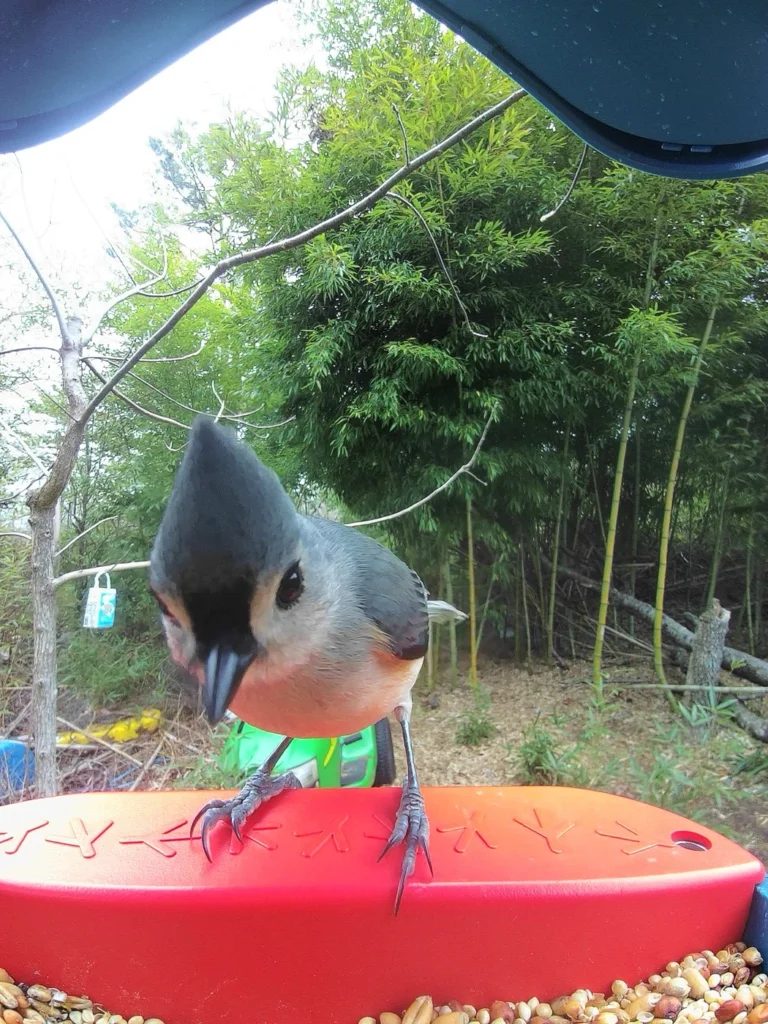
The Tufted Titmouse is a small but sturdy songbird, larger than a chickadee and shaped with a thick neck, rounded body, and obvious pointed crest. The upperparts are soft gray, while the underparts are pale with a warm peach or rusty wash along the flanks. A black patch above the bill gives the face a distinct look. Both sexes look similar.
Its voice is often described as a clear whistled peter-peter-peter. Many people hear the bird before they notice it moving through branches.
Range and Habitat
Tufted Titmice live year-round across much of the eastern United States. They are most often found in deciduous forests, mixed woods, parks, orchards, and residential areas with mature trees. They are especially comfortable in places where there is a dense canopy and a variety of tree species.
Because they do well around people, Tufted Titmice are among the easiest woodland birds to enjoy from a backyard feeder.
Diet and Feeding Behavior
During the warmer months, Tufted Titmice eat many insects and other small invertebrates, including caterpillars, beetles, ants, wasps, spiders, and snails. In cooler months they rely more on seeds, nuts, and berries. Acorns and beechnuts are among their natural foods.
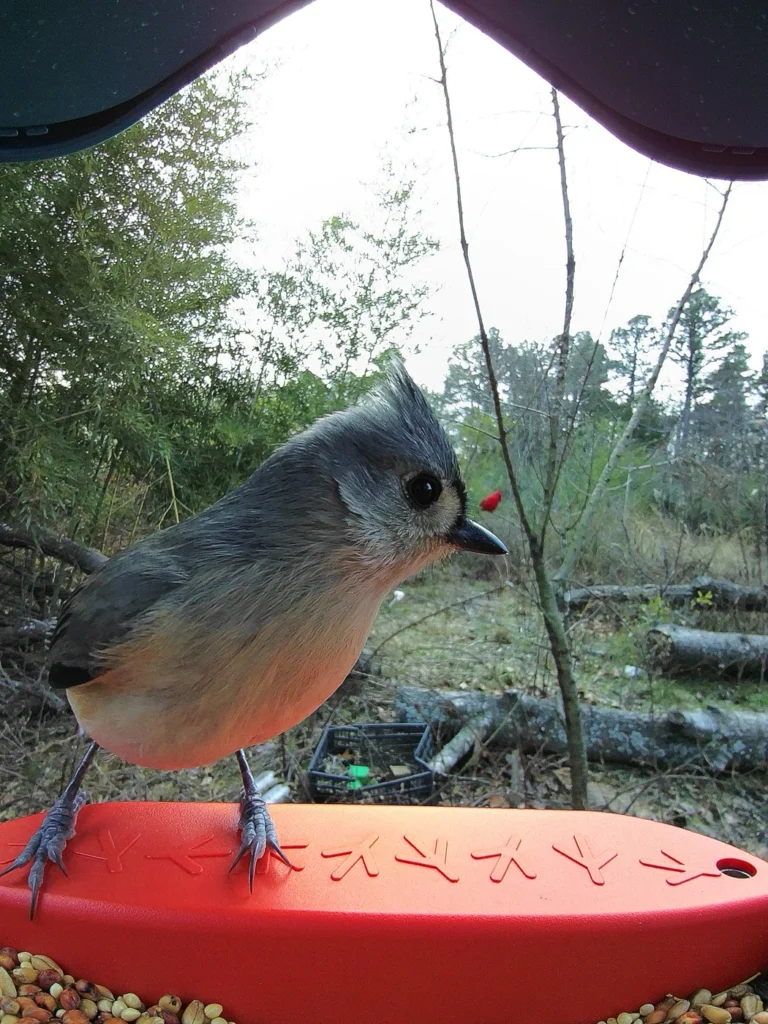
At feeders, they readily take sunflower seeds, peanuts, suet, and mixed birdseed. They are known for selecting a single seed, carrying it away, and opening it at a perch. They also cache food in fall and winter.
Nesting and Breeding
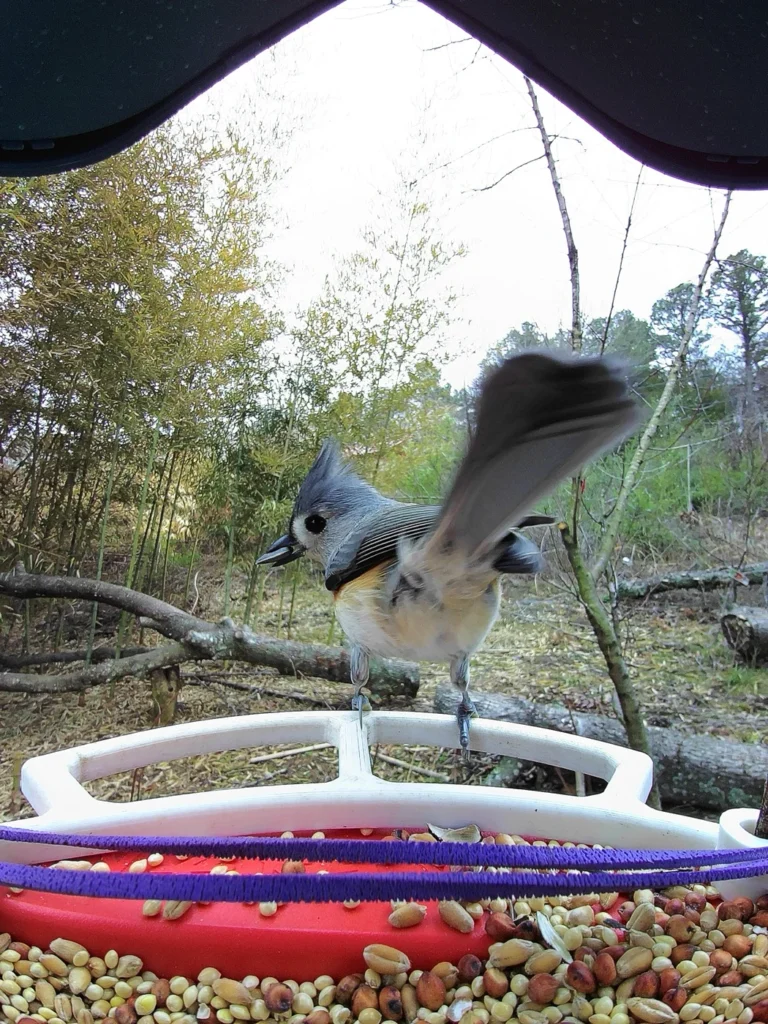
Tufted Titmice nest in cavities, but they cannot excavate their own nesting holes. Instead, they use natural cavities, old woodpecker holes, or nest boxes. They often line the nest with soft materials, including hair, moss, and plant fibers.
This dependence on existing cavities makes older trees and dead wood especially valuable in their habitat.
Backyard Feeding Tips
- Offer black oil sunflower seeds, peanuts, or suet for the best chance of attracting Tufted Titmice.
- Provide cover nearby, such as shrubs and mature trees, so they can move safely to and from the feeder.
- Consider a nest box if you want to encourage breeding birds in spring.
- Leave some natural habitat in place, including mature trees and wooded edges.
Quick Facts
- Common name: Tufted Titmouse
- Scientific name: Baeolophus bicolor
- Family: Paridae
- Length: About 5.5 to 6.3 inches
- Wingspan: About 7.9 to 10.2 inches
- Main foods: Insects, spiders, seeds, nuts, and berries
- Nest type: Cavity nest
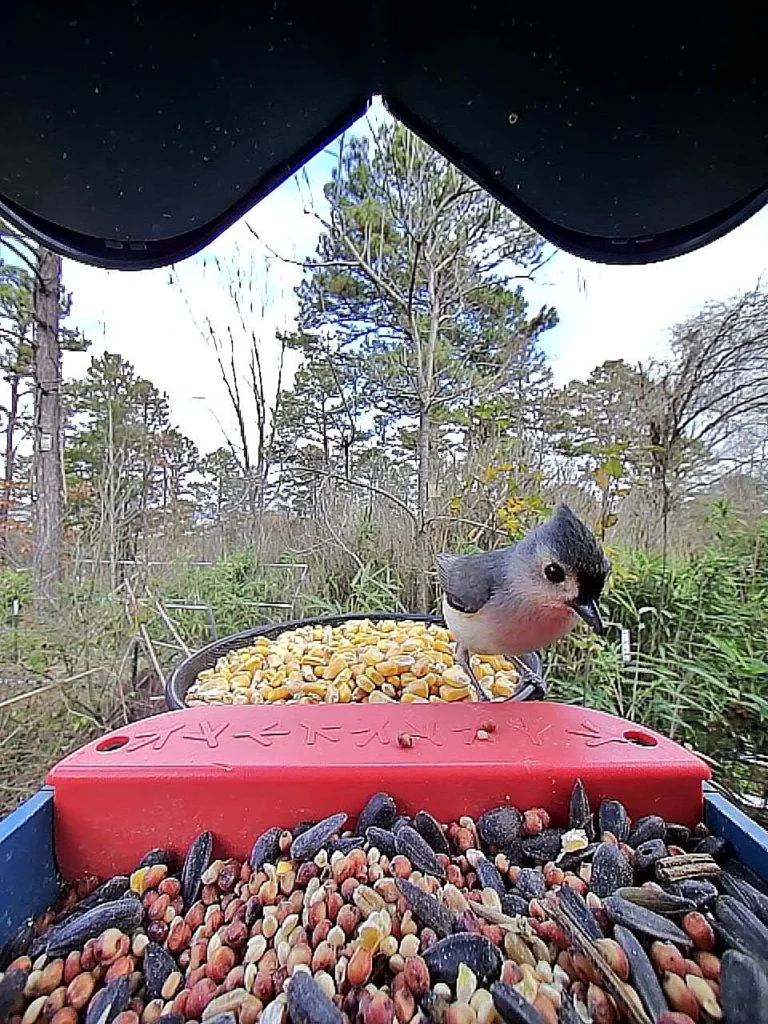
- Backyard appeal: Regular feeder visitor, especially in winter
Sources
- Cornell Lab of Ornithology, All About Birds – Tufted Titmouse Overview
- Cornell Lab of Ornithology, All About Birds – Tufted Titmouse Life History
Photographs © Daniel Garber / MyGarlix.com. All rights reserved.