
Scientific name: Archilochus colubris · Family: Trochilidae
The Ruby-throated Hummingbird is a tiny, fast-moving visitor to gardens, woodland edges, and backyard feeders across eastern North America. Its iridescent green feathers and extraordinary hovering flight make it a favorite bird to watch during the warmer months.
In Arkansas, the Ruby-throated Hummingbird is the only species that regularly breeds. Other hummingbird species have occasionally been recorded in the state, especially during migration or in winter, but most hummingbirds visiting Arkansas feeders in spring and summer are Ruby-throated Hummingbirds.
At a glance: Length 2.8–3.5 in (7–9 cm) · Wingspan about 3–4.3 in (8–11 cm) · Diet: flower nectar and tiny arthropods · Habitat: forest edges, gardens, open woodland · Arkansas: common warm-season visitor and breeder
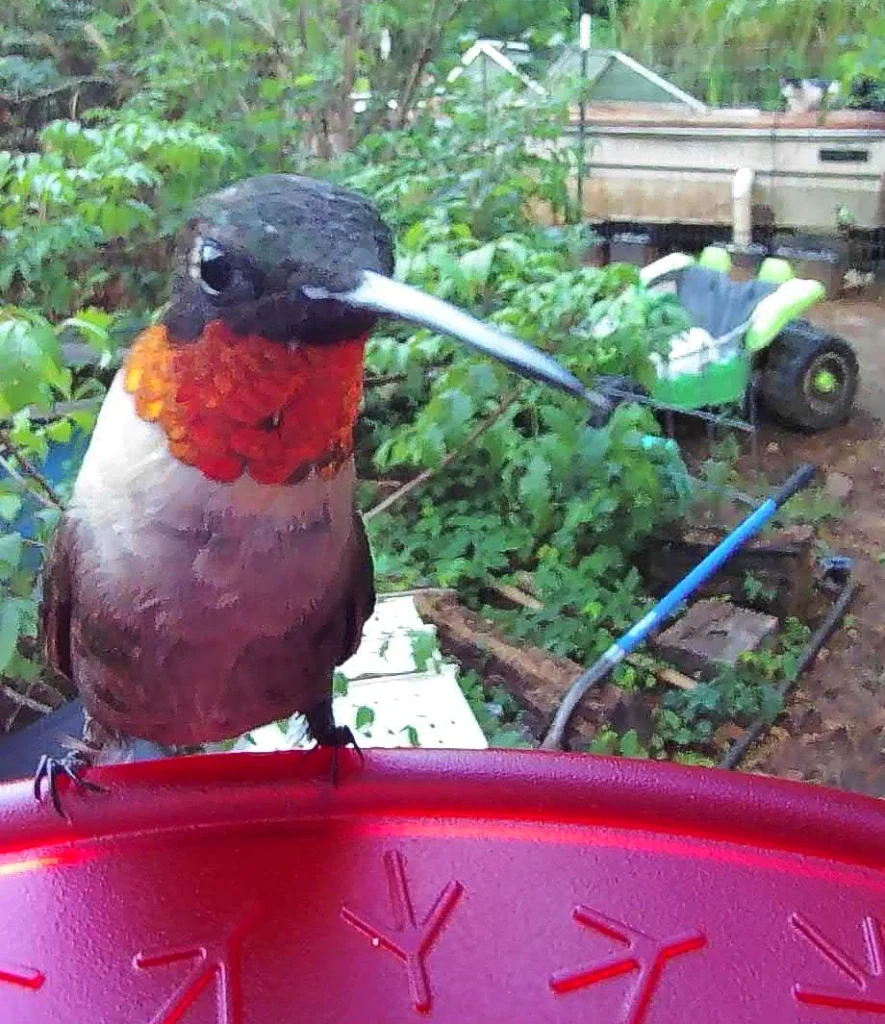
How to identify a Ruby-throated Hummingbird
Ruby-throated Hummingbirds are small, with slender, straight bills, short legs, and fast-beating wings. Both sexes have greenish upperparts and pale underparts, although their markings differ.
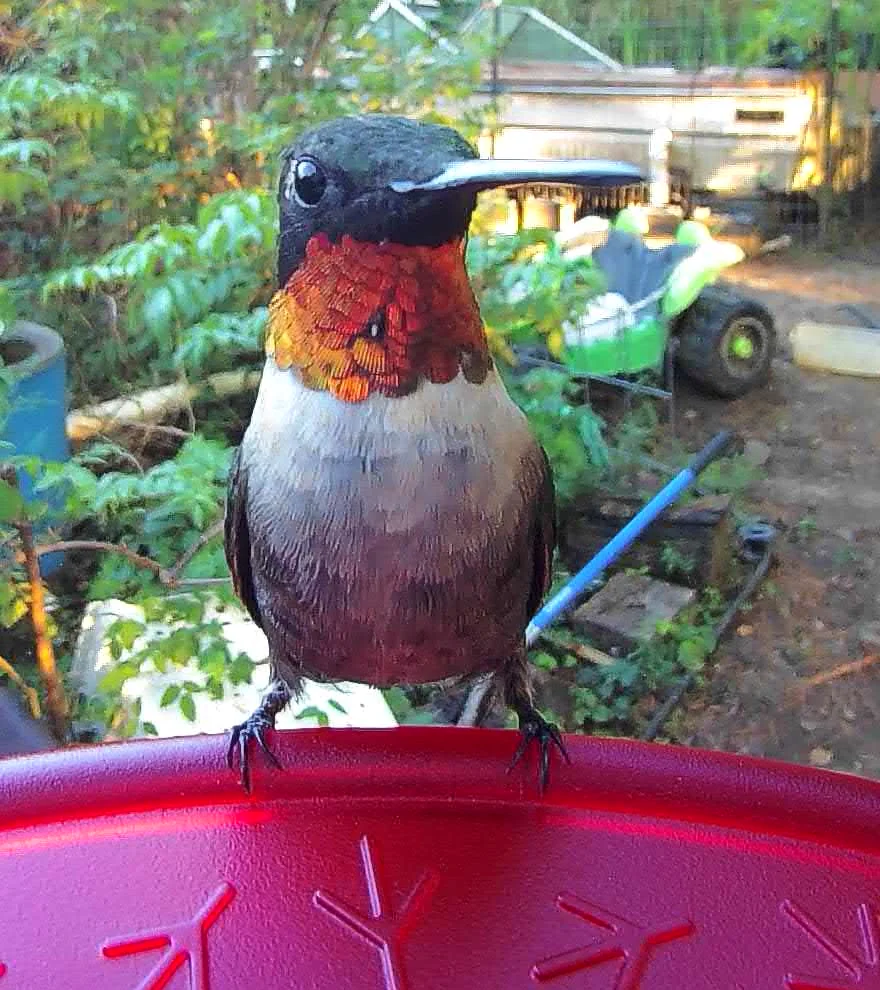
Adult male: A male has a blackish face and an iridescent ruby-red throat patch, called a gorget. The gorget may look dark or nearly black when the light hits it at the wrong angle. Males also have a dark, forked tail.
Female: An adult female has green upperparts, a pale grayish-white throat, whitish underparts, and white tips on the outer tail feathers. She generally lacks the adult male’s red gorget.
Young birds: Juveniles often resemble females. Young males may eventually show a few scattered red throat feathers as they mature. A single pale-throated photograph may not be enough to determine whether a bird is female or immature.
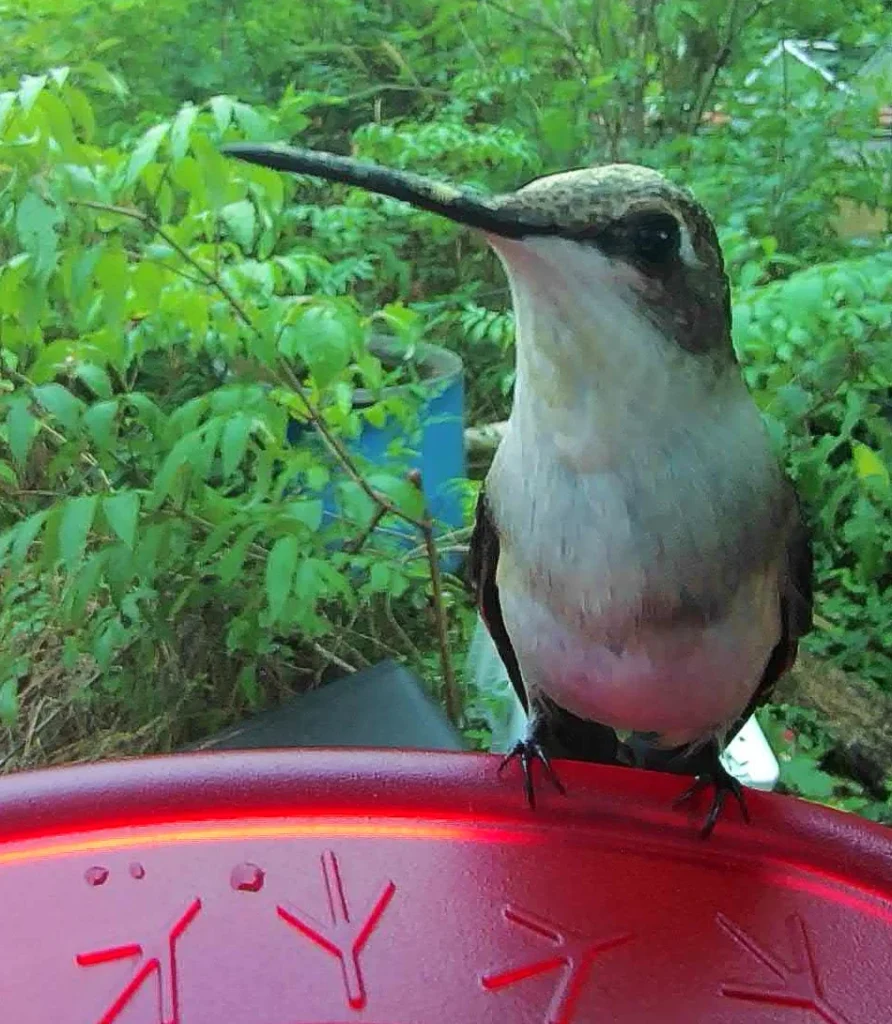
Habitat and range
The Ruby-throated Hummingbird breeds across much of eastern North America and parts of southern Canada. It favors places where flowers, small insects, and shelter are available, including open woodlands, stream edges, orchards, gardens, and forest clearings.
Arkansas provides suitable summer habitat, especially where trees and shrubs border sunny, flower-filled openings. Ruby-throated Hummingbirds are migratory. Most spend the winter farther south in Mexico and Central America, with some individuals crossing the Gulf of Mexico during migration.
Males often arrive on breeding grounds before females in spring, and adult males may begin their southward movement earlier than females and young birds in late summer.
What Ruby-throated Hummingbirds eat
Flower nectar supplies the sugars hummingbirds need to fuel their active lives. These birds use a long, extendable tongue to collect nectar while hovering or perching near a blossom. They frequently visit tubular flowers, including cardinal flower, trumpet creeper, bee balm, and native honeysuckles.
They also eat tiny insects and spiders, which provide protein and other nutrients missing from nectar. A hummingbird may catch small insects in midair, pick them from leaves, or remove them from spiderwebs.
A sugar-water feeder can supplement natural nectar, but a garden full of suitable flowers and insect habitat provides a more complete food source.
Flight, calls, and behavior
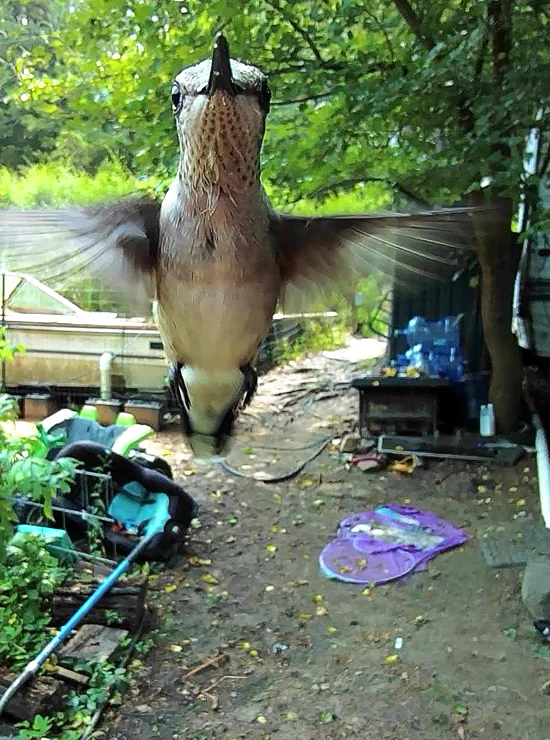
Ruby-throated Hummingbirds can hover in place, move sideways, fly backward, and accelerate rapidly between flowers. Their wings beat roughly 50 times per second during hovering flight, creating the familiar buzzing sound.
They are often territorial around flowers and feeders. An adult male may chase other hummingbirds away from a valuable food source, although birds sometimes share feeding areas when plenty of nectar is available.
Their voices are small compared with their energetic flight. Listen for quick, high-pitched chips and squeaky calls, especially during chases.
Nesting and raising young
The female Ruby-throated Hummingbird builds a tiny cup-shaped nest, often on a slender tree branch. She uses plant down, spider silk, and other fine materials, sometimes decorating the outside with lichens for camouflage. The flexible spider silk allows the nest to expand as the young grow.
Most clutches contain two very small white eggs, although clutch sizes can vary. Incubation generally lasts 12–14 days, and young birds usually remain in the nest for approximately 18–22 days after hatching.
The female handles incubation and care of the chicks. The male does not normally help raise the young.
How to attract Ruby-throated Hummingbirds
A hummingbird-friendly yard offers flowering plants, insect habitat, perches, and a dependable source of clean water. Native nectar flowers are especially useful because they also support insects that hummingbirds eat.
Choose plants suited to your growing conditions. In Arkansas, possibilities include cardinal flower, native bee balms, trumpet honeysuckle, and other tubular-flowered native plants. Offer a mix of early-, mid-, and late-season blooms to keep food available throughout the hummingbird season.
A simple, safe hummingbird nectar recipe
- Mix 1 part plain white granulated sugar with 4 parts water, for example, ¼ cup sugar in 1 cup water.
- Use hot water to dissolve the sugar and allow the mixture to cool completely before filling feeders.
- Use clear nectar. Avoid red dye, honey, brown sugar, and artificial sweeteners.
- Clean the feeder regularly and replace nectar every few days in mild weather. In very hot weather, check and clean it daily or every other day. Replace cloudy nectar immediately.
Feeder placement matters, too. A location with some shade helps slow spoilage. Avoid placing feeders where cats can reach the birds or where birds are likely to collide with windows. If one hummingbird repeatedly guards a feeder, try spacing additional feeders apart and out of sight of one another.
Hummingbirds can also use fine misters and dripping water, especially in hot weather. Keep water features clean and provide nearby vegetation for cover.
Five interesting Ruby-throated Hummingbird facts
- It is the only hummingbird species that breeds regularly throughout the eastern United States.
- A male’s red throat is iridescent and can appear almost black in different light.
- These birds can fly backward and hover with great precision.
- Their short legs are well adapted for perching but poorly suited to walking.
- Some individuals make remarkable migratory flights across or around the Gulf of Mexico.
Sources & Further Reading
- Cornell Lab of Ornithology, Ruby-throated Hummingbird Identification
- Cornell Lab of Ornithology, Ruby-throated Hummingbird Life History
- National Audubon Society, Ruby-throated Hummingbird Field Guide
- National Audubon Society, Hummingbird Feeding FAQs
- National Audubon Society, Create a Hummingbird-Friendly Yard
Photographs © Daniel Garber / MyGarlix.com. All rights reserved.