
Scientific name: Melanerpes carolinus
The Red-bellied Woodpecker is one of the most familiar and entertaining woodpeckers of the eastern United States. It is common in wooded neighborhoods, rural yards, parks, and forest edges, where its rolling calls and bold black-and-white back often give it away before you notice the bird itself. Despite the name, the species is not especially known for a bright red belly. Most people notice the red head markings long before they ever see the faint blush on the underparts.
In Arkansas, Red-bellied Woodpeckers are year-round residents and regular visitors to backyard feeding stations. They are adaptable, curious birds that move easily between natural woodland and human-altered landscapes. Because they use trunks and major branches so often, they bring a different kind of energy to a feeder setup than cardinals, buntings, and finches do.
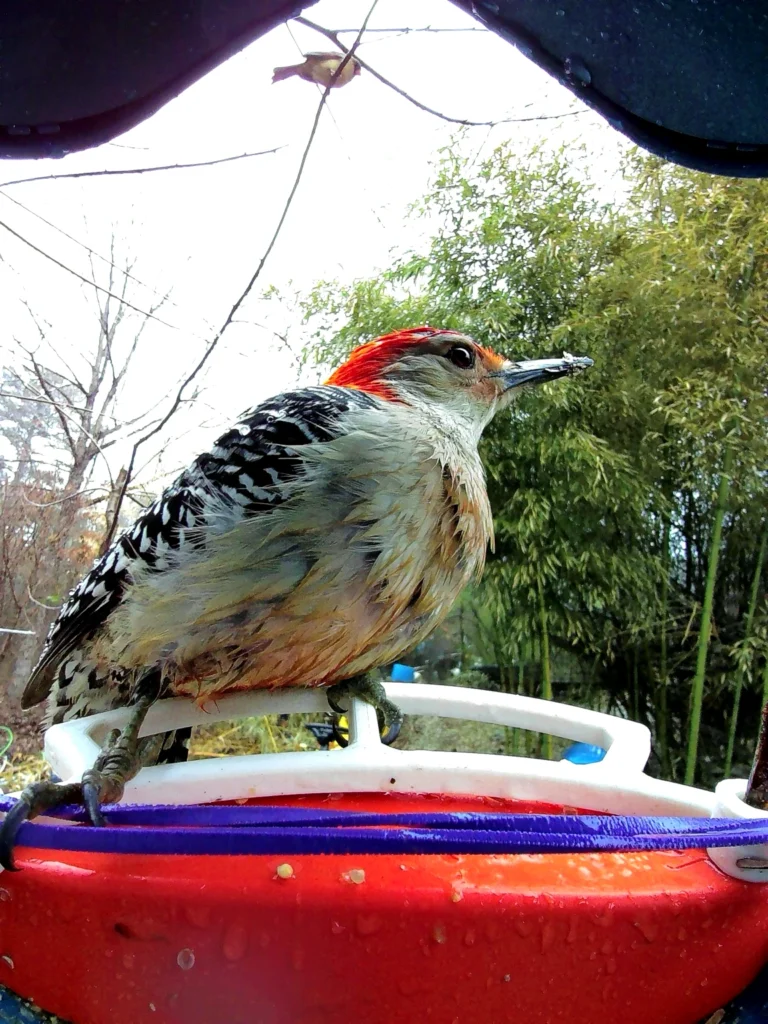
Identification and Appearance
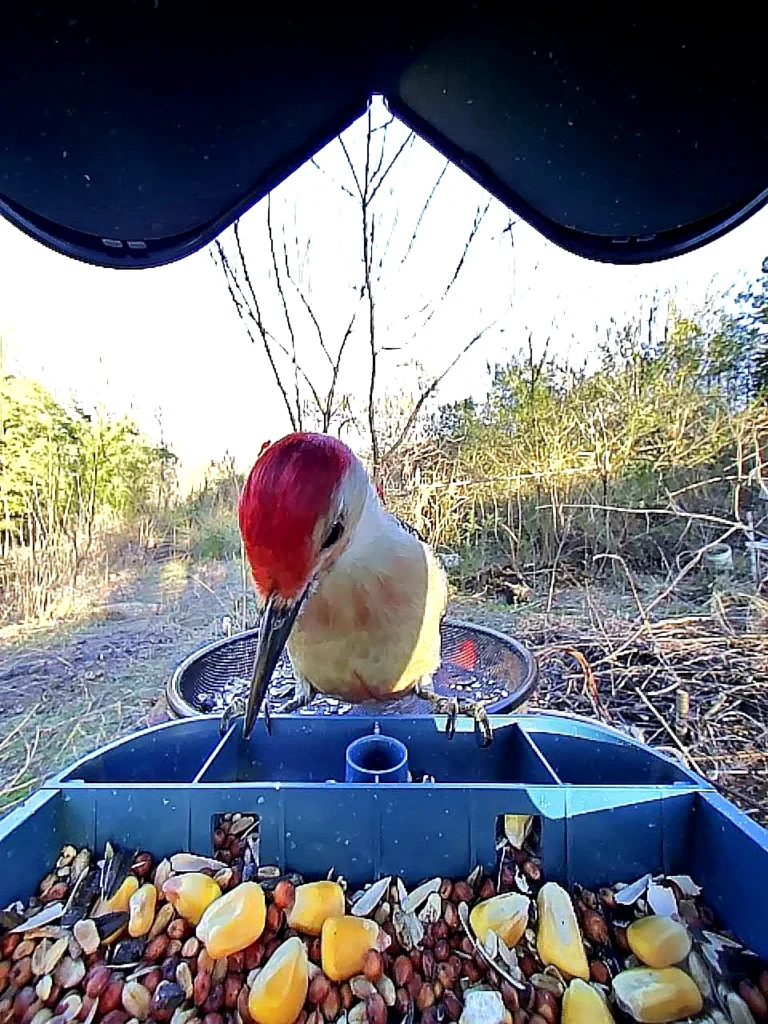
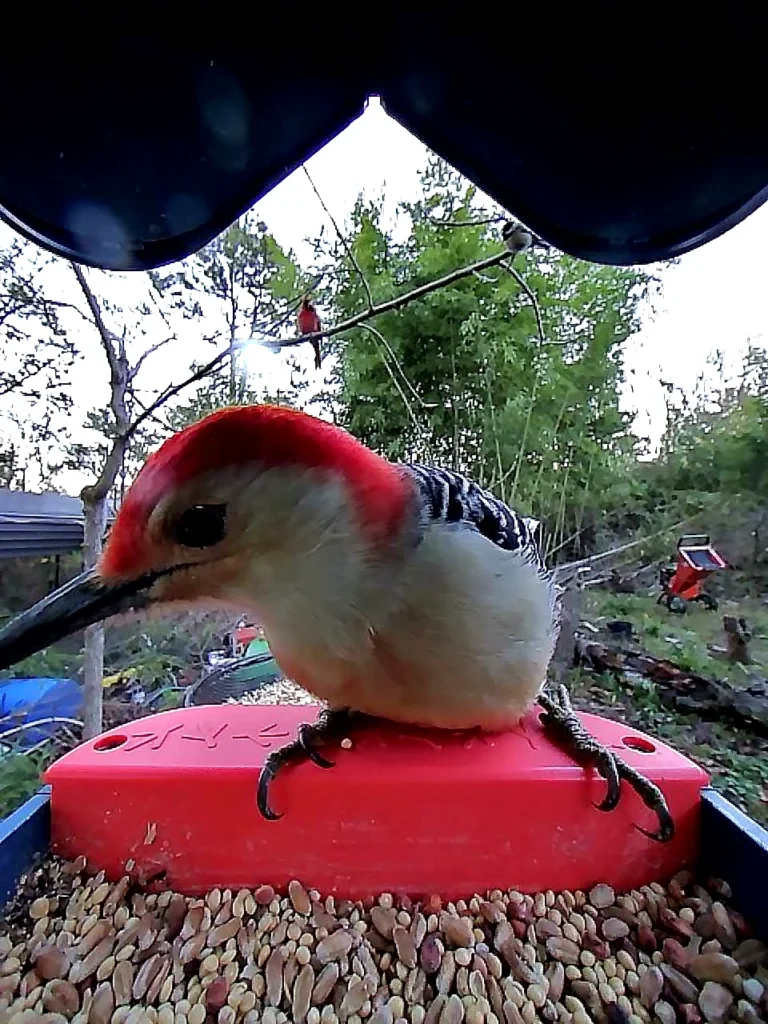
Red-bellied Woodpeckers are pale, medium-sized woodpeckers with a zebra-striped black-and-white back, a long chisel-like bill, and a buffy or pale gray face and underparts. Their name can be confusing because the reddish wash on the belly is usually faint and often hard to see in the field. The bold red on the head is much more obvious.
Males and females look similar at first glance, but there is a helpful difference. Adult males typically show red from the nape forward over the crown to the forehead. Adult females usually have red on the nape and back of the head, while the crown is more gray. In both sexes, the back pattern is striking and easy to recognize once you become familiar with it.
These woodpeckers also have sturdy feet and stiff tail feathers that help them brace against trunks and feeders. Their straight bill is well suited for pecking, probing bark, and handling a wide variety of foods.
Habitat and Range
This species occurs across much of the eastern United States and has expanded northward over time. It is especially common in forests, woodland edges, river bottoms, swamps, wooded suburbs, orchards, and mature backyard landscapes. In the South, it is often seen around bottomland woods and mixed pine-hardwood habitat, but it adapts readily to neighborhoods with trees.
Arkansas is well within the species’ year-round range. If you have mature trees, nearby wooded cover, and reliable food sources, Red-bellied Woodpeckers can be regular visitors in every season.
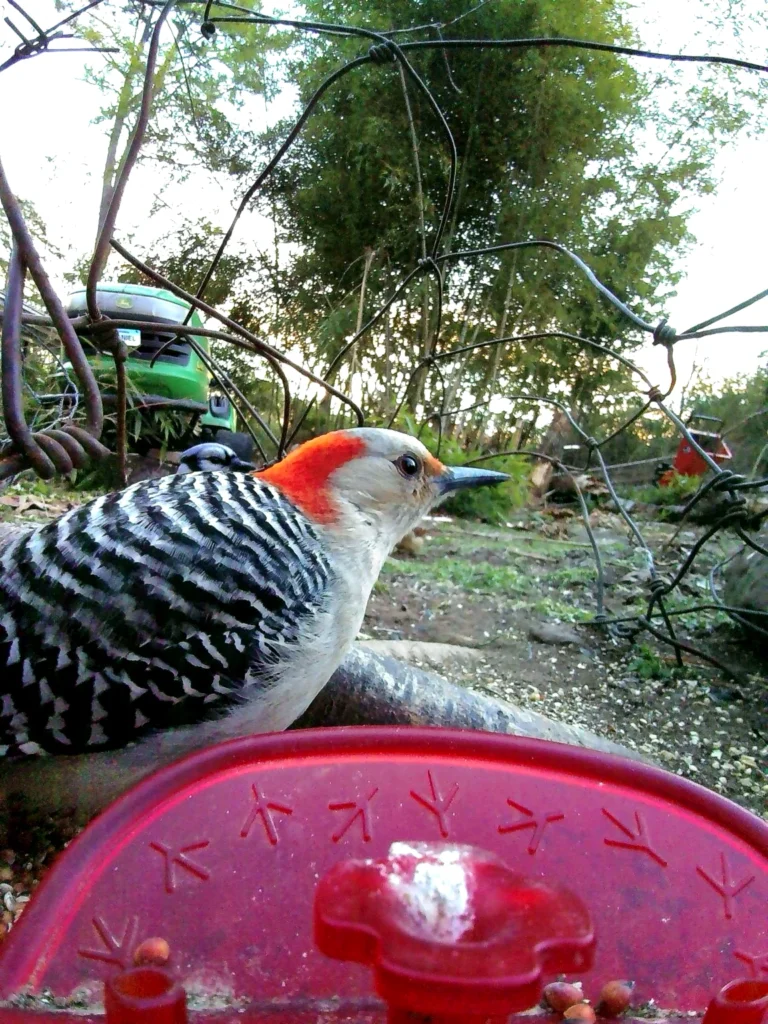
Diet and Feeding Habits
Red-bellied Woodpeckers are omnivores. They eat many insects and other arthropods, but they also consume nuts, acorns, seeds, berries, and other fruits. In natural settings they search bark crevices, trunks, and branches for beetles, ants, spiders, and larvae. They also use their bill to pry and probe for food hidden in cracks or tucked into rough bark.
At backyard feeders they often take suet, shelled peanuts, peanut pieces, sunflower seeds, and other high-energy foods. They may also investigate mixed seed, platform feeders, and occasionally cracked corn or large seed blends. In practical backyard feeding, suet, peanuts, and sunflower are usually the most dependable foods for attracting them.
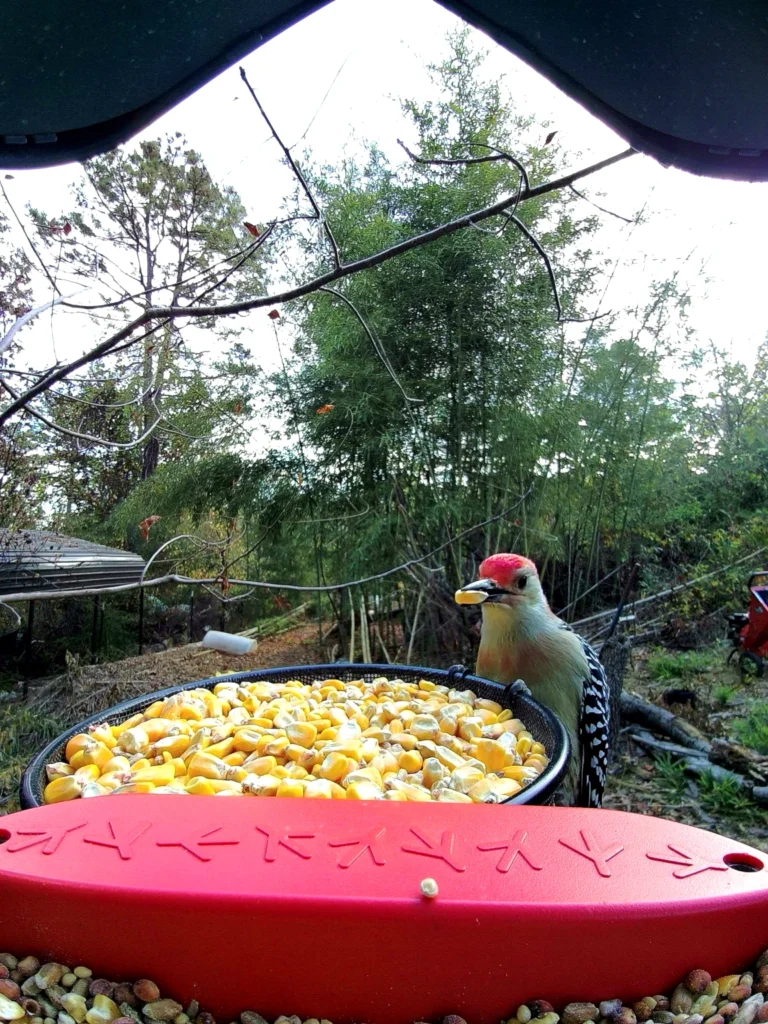
Behavior
Unlike many small feeder birds that hop from perch to perch, Red-bellied Woodpeckers often move with a purposeful climbing style. They hitch along trunks and larger limbs, using their feet and tail for support. Around feeders they can be confident and assertive, especially when larger food items such as suet or peanuts are available.
They are also vocal birds. Their calls include rolling and chattering notes that carry well through the woods. In spring especially, their drumming and calls make them easier to detect even when they are hidden in the canopy.
Another interesting behavior is food storage. Like several other woodpeckers, they may wedge food into bark or crevices to eat later.
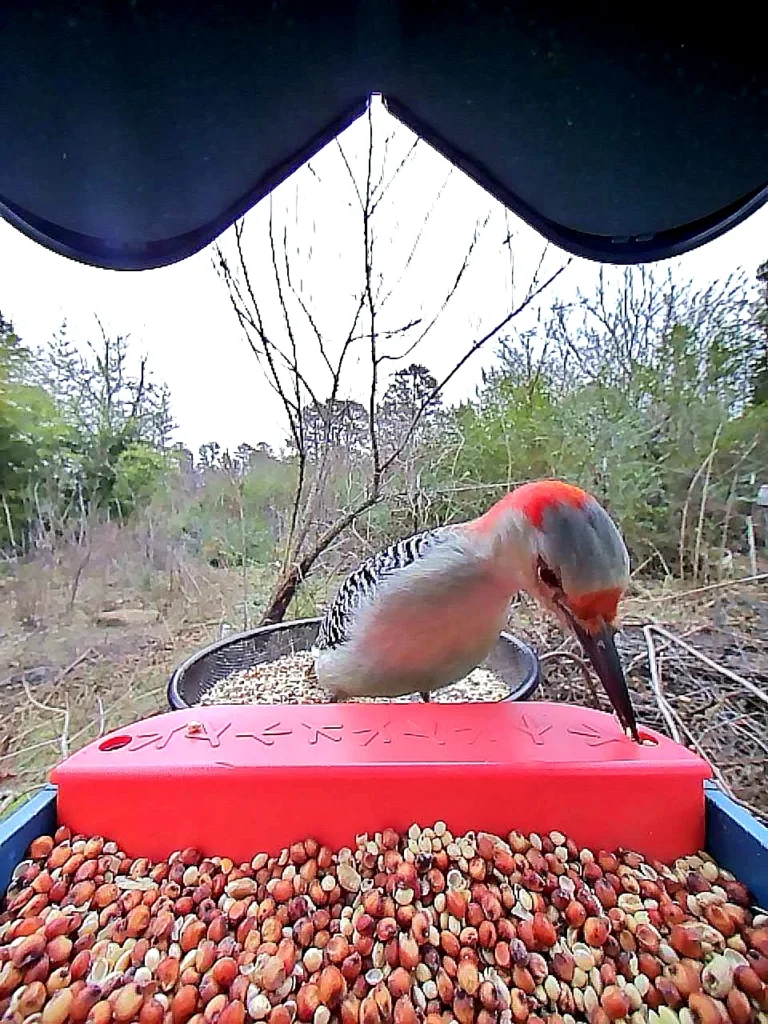
Nesting and Reproduction
Red-bellied Woodpeckers nest in cavities that they excavate themselves. Nest sites are usually in dead trees, dead limbs of living trees, snags, or occasionally fence posts and similar structures. The male often begins selecting and excavating the site, and both birds may participate in finishing the cavity.
A typical clutch contains 2 to 6 eggs. Incubation lasts about 12 days, and young generally remain in the nest for roughly 24 to 27 days before fledging. In suitable conditions, pairs may raise more than one brood in a season.
Because cavity-nesting birds depend on dead wood, safe standing snags and mature trees can be very valuable habitat features when they do not pose a hazard.
How to Attract Red-bellied Woodpeckers
If you want to attract Red-bellied Woodpeckers to your yard, focus on the same things that support many other resident birds: food, water, shelter, and trees.
- Offer suet in a wire cage or suet feeder.
- Provide peanuts, peanut pieces, or black-oil sunflower seed.
- Keep a clean bird bath or other shallow water source available.
- Maintain mature trees, wooded edges, and natural cover where possible.
- Leave safe dead limbs or snags only when they do not create a risk.
- Clean feeders regularly to reduce disease spread.
These birds often do best where trees and structure are already present. A bare open yard is less attractive than a yard connected to woodland or shrubby cover.
Interesting Red-bellied Woodpecker Facts
- The name is misleading. The red belly is usually faint, while the red head pattern is much easier to see.
- They are year-round birds in Arkansas. Many people can watch them in every season if suitable habitat is nearby.
- They are cavity nesters. They excavate their own nesting holes in dead wood.
- They visit feeders regularly. Suet, peanuts, and sunflower are among the best foods for attracting them.
- They often cache food. Some items are tucked into bark or crevices for later use.
Sources & Further Reading
- Cornell Lab of Ornithology: Red-bellied Woodpecker Overview
- Cornell Lab of Ornithology: Red-bellied Woodpecker Life History
- National Audubon Society: Red-bellied Woodpecker Field Guide
- University of Arkansas Division of Agriculture: Feeding Backyard Songbirds
Photographs © Daniel Garber / MyGarlix.com. All rights reserved.