
Species: Northern Cardinal (Cardinalis cardinalis) · Family: Cardinalidae
The Northern Cardinal brings year-round color to woods, hedgerows, and backyards across the eastern United States. The male’s bright red feathers are hard to miss, while the female’s subtler brown and red plumage blends beautifully into shrubs. Both birds share a pointed crest, a heavy bill, and a clear, whistling song. Learning to recognize these features makes it easy to identify cardinals even when their colors are partly hidden.
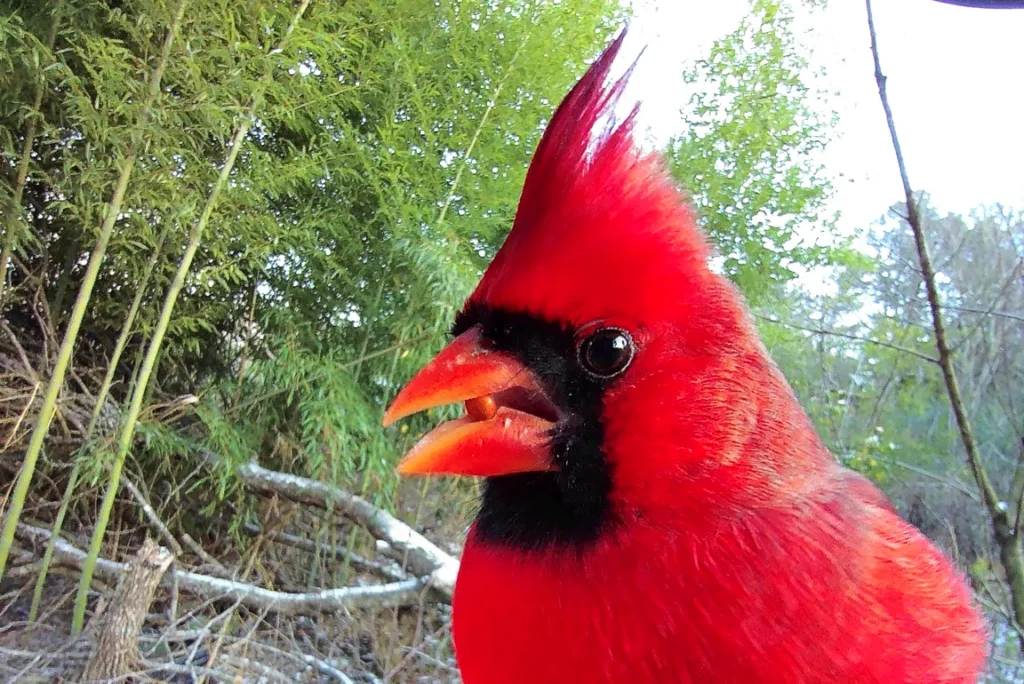
At a glance: Length 8.3–9.1 in (21–23 cm) · Wingspan 9.8–12.2 in (25–31 cm) · Family: Cardinalidae · Arkansas: present year-round · Foods: seeds, fruit, and insects
How to identify a Northern Cardinal
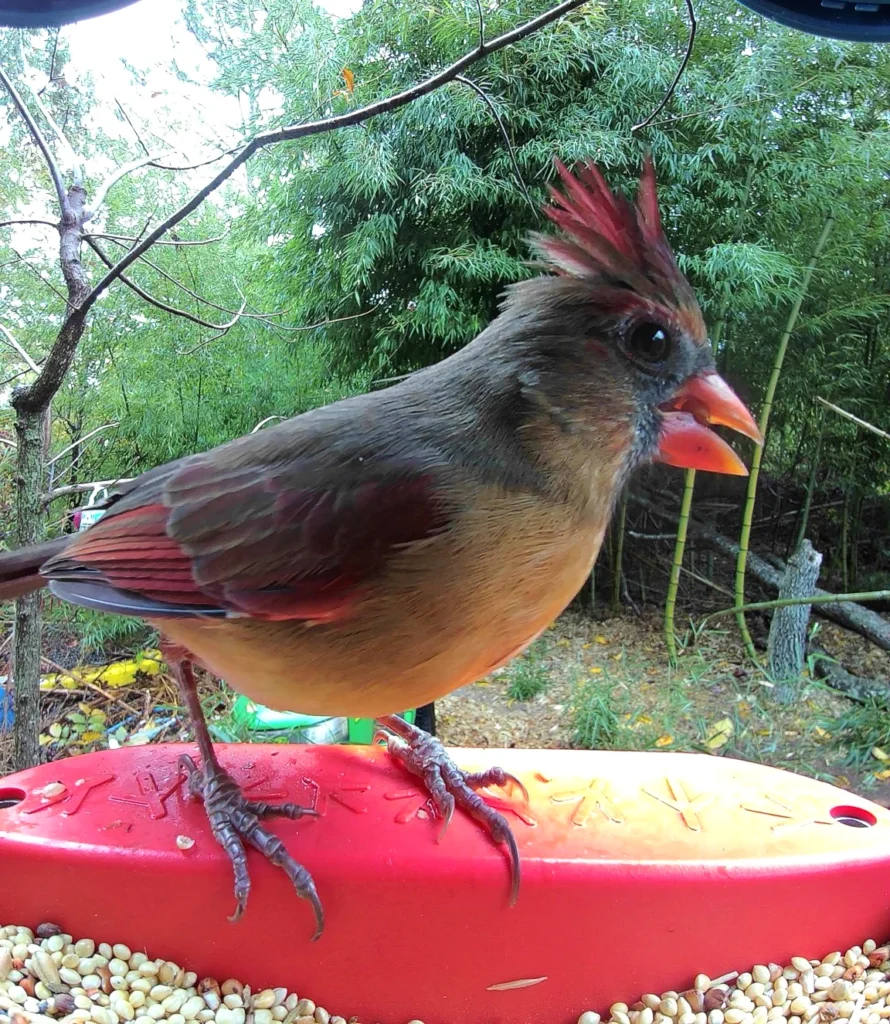
Northern Cardinals are medium-sized, long-tailed songbirds with a short, thick, cone-shaped bill. Their prominent head crest can stand tall or flatten according to the bird’s posture. Both sexes have a reddish-orange bill and dark markings near the face.
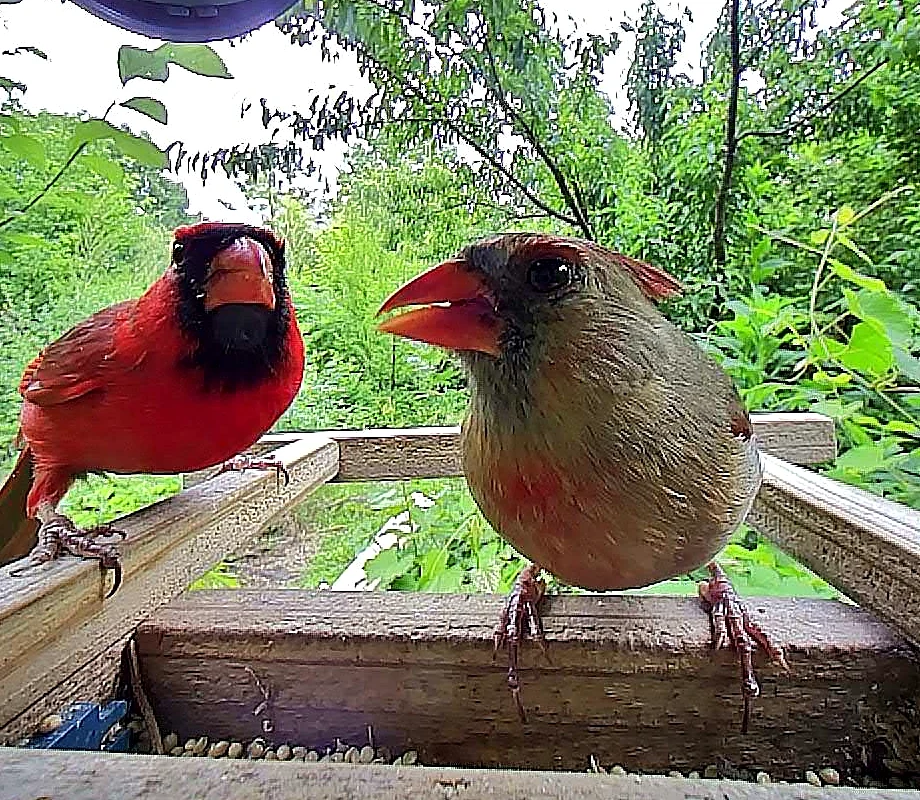
Adult males are brilliant red over most of the body, with a striking black mask around the bill and throat. Their wings and tail may show slightly darker red tones.
Adult females are mostly warm tan or pale brown, with reddish touches on the crest, wings, and tail. Their bill is usually bright orange-red, and a dark facial mask surrounds its base. The softer colors can make females harder to notice in dense vegetation.
Juveniles resemble females in overall color, but their bills begin dark gray to black and become reddish as they mature. Both sexes retain their recognizable shape throughout the year.
Habitat and range
Northern Cardinals live across much of eastern and central North America and extend into parts of the southwestern United States and Mexico. They are familiar residents in Arkansas throughout the year. Unlike many seasonal backyard visitors, cardinals do not undertake regular long-distance migrations.
They favor habitat with dense shrubs and thickets, including woodland edges, overgrown fields, hedgerows, parks, and residential gardens. A mixture of cover and open feeding areas works especially well: cardinals can search for food near the ground, then retreat quickly into foliage.
What Northern Cardinals eat
The Northern Cardinal eats seeds, fruit, and insects. Wild foods include grass and weed seeds, berries, and fruits from native shrubs and trees. Beetles, caterpillars, grasshoppers, and other invertebrates also contribute to its diet.
During nesting season, adult cardinals feed their growing chicks mostly insects, which supply the protein the young birds need. Later in the year, seeds and fruits become particularly conspicuous parts of their diet.
At backyard feeders, cardinals readily eat black oil sunflower seeds and may also take safflower seeds. Their strong bills are well suited to cracking seed shells.
Songs, calls, and behavior
Cardinals communicate with clear, musical whistles that may sound like repeated “cheer” or “birdie” phrases. They also give sharp, metallic-sounding chip calls, often while moving through shrubs.
Both male and female Northern Cardinals sing. Female song is especially interesting because it is less common among many familiar North American songbirds. A female may even sing from the nest, possibly communicating with her mate.
During the breeding season, pairs defend territories against other cardinals. Birds sometimes attack their own reflection in windows or car mirrors after mistaking it for an intruder. Outside nesting season, cardinals may forage in groups, particularly during winter.
Nesting and raising young
A female Northern Cardinal usually builds the nest, although the male may bring some nesting material. She creates a small, open cup from twigs, bark strips, grasses, and other plant fibers, often hiding it within thick shrubs, vines, or low trees.
According to the Cornell Lab of Ornithology, cardinal nests are often placed roughly 1–15 feet above the ground. A typical clutch contains 2–5 eggs, with an incubation period of about 11–13 days. The nestlings generally stay in the nest for another 7–13 days. Both parents help feed the young, and a pair may raise more than one brood during a breeding season.
Keeping shrubs, hedges, and tangles of native plants provides the sheltered spaces cardinals need to raise their young.
How to attract cardinals to your backyard
You can make a yard inviting to Northern Cardinals by providing reliable food, clean water, and safe plant cover.
- Offer sunflower seeds. Black oil sunflower seeds are a reliable starting point. Safflower is another option cardinals may accept.
- Choose sturdy feeders. A platform or roomy hopper feeder provides space for cardinals to perch while eating.
- Provide fresh water. A shallow birdbath gives visiting birds a place to drink and bathe.
- Maintain dense shrubs. Native thickets and hedges can provide shelter and nesting sites.
- Keep feeding areas clean. Remove damp or spoiled seed and regularly scrub and dry feeders to reduce the spread of disease.
Even without a feeder, a yard with seed-bearing plants, native fruiting shrubs, and insect-friendly vegetation can provide useful food and habitat.
Five interesting Northern Cardinal facts
- Both male and female Northern Cardinals can sing, sometimes using similar song phrases.
- Northern Cardinals stay within their range throughout the year rather than making regular seasonal migrations.
- The vivid red of males contrasts with the subtle brown and red pattern of females.
- Juveniles have dark bills that gradually turn orange-red as they mature.
- The Northern Cardinal is the official state bird of seven U.S. states.
Sources & further reading
- Cornell Lab of Ornithology: Northern Cardinal Identification
- Cornell Lab of Ornithology: Northern Cardinal Life History
- National Audubon Society: Northern Cardinal Field Guide
- Cornell Project FeederWatch: How to Clean Your Feeders
Photographs © Daniel Garber / MyGarlix.com. All rights reserved.