
Scientific name: Passerina cyanea
The Indigo Bunting is one of the most striking small songbirds of eastern North America. In spring and summer, adult males glow in brilliant blue, often singing from treetops, roadside wires, and brushy field edges. Even though they are not large birds, their vivid color and cheerful song make them memorable visitors wherever they occur.
Indigo Buntings belong to the cardinal family, Cardinalidae. They are common in shrubby openings, weedy fields, woodland edges, and overgrown rural places. In Arkansas, they are mainly warm-season birds, arriving in spring and departing in fall as they migrate south for winter.

Identification and Appearance
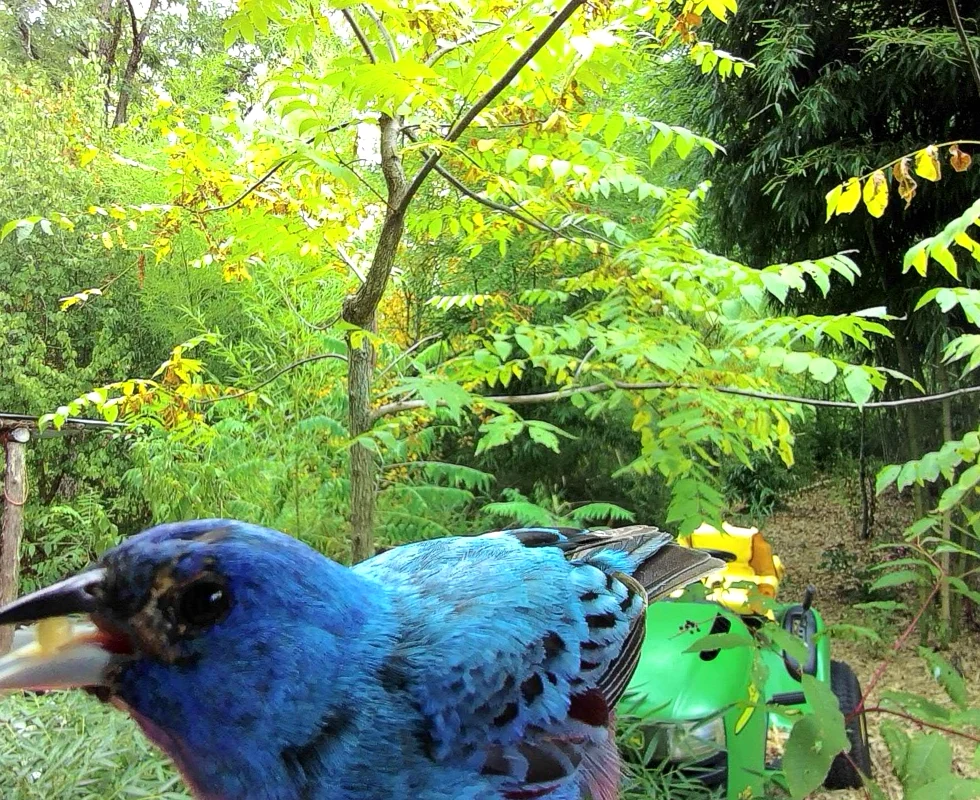
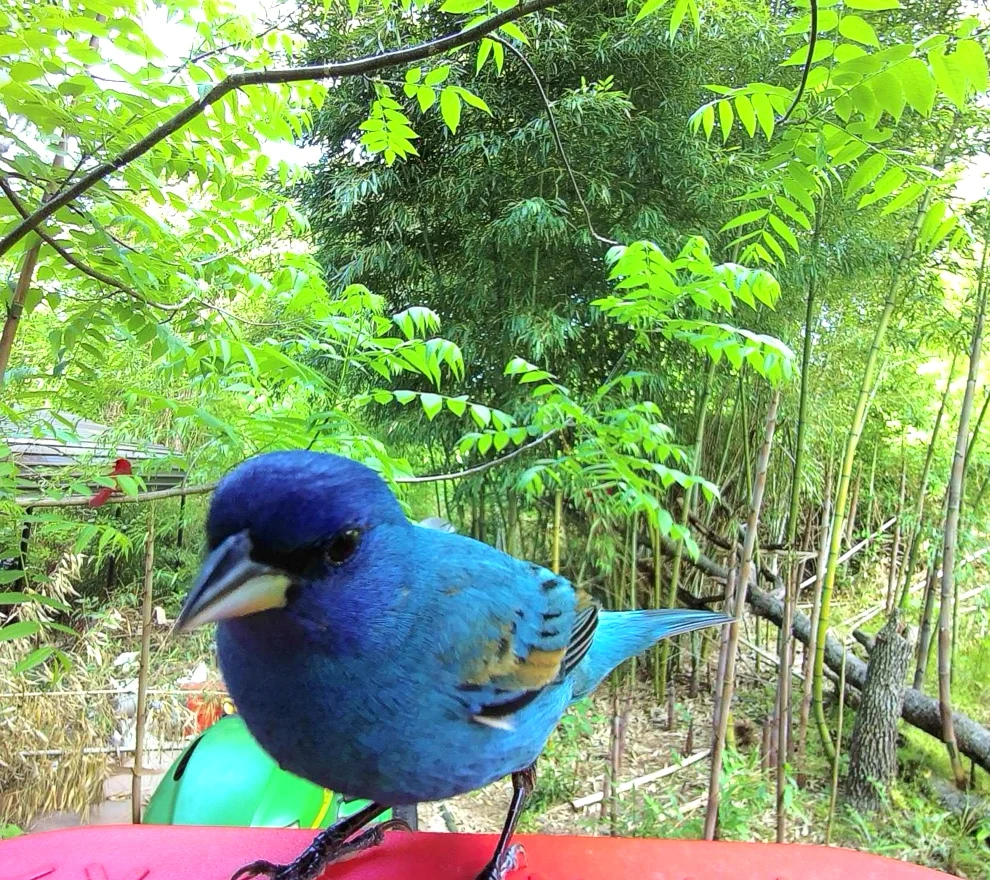
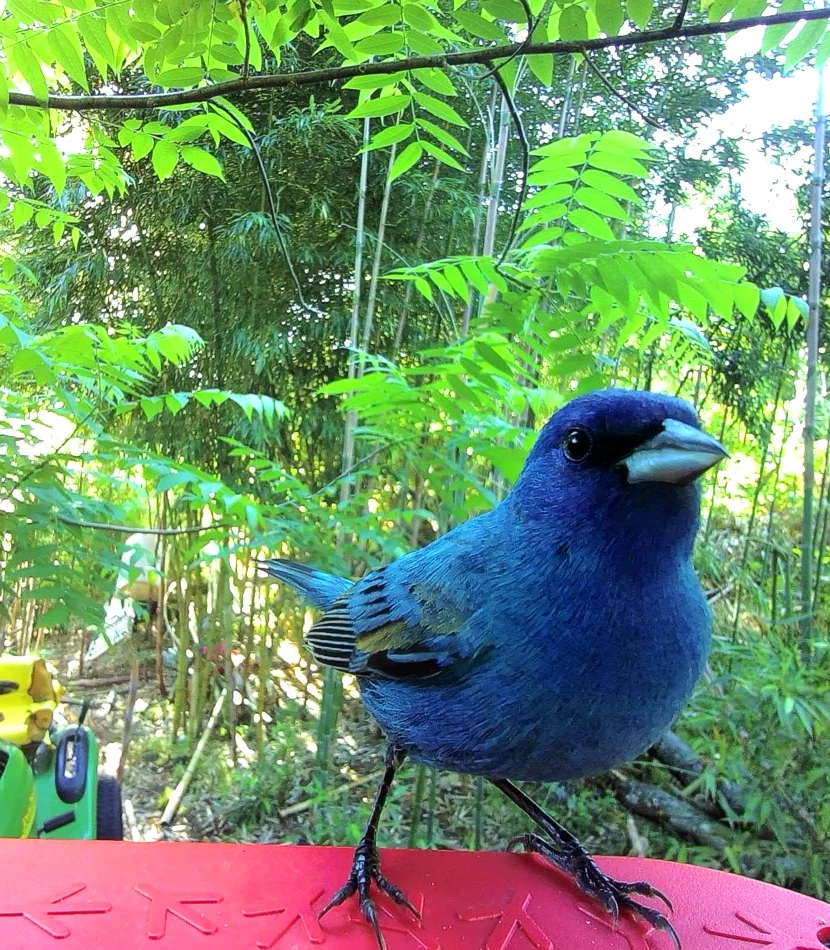
Adult male Indigo Buntings are deep blue overall during the breeding season, sometimes appearing almost jewel-like in good light. Their color can range from bright sky blue to darker indigo tones depending on lighting. They also have a stout, conical bill suited to eating seeds.
Females and immature birds look very different. Instead of blue, they are mostly warm brown with paler underparts and faint streaking. Some immature males show patchy blue mixed with brown as they molt into adult plumage. This difference between the sexes can make beginners think they are seeing two different species.
Like Blue Jays, Indigo Buntings do not get their blue appearance from blue pigment. Their feathers produce that color through microscopic structures that reflect and scatter light.
Habitat and Range
Indigo Buntings prefer brushy, weedy, and partly open habitats rather than deep forest. They are especially common along woodland edges, old fields, overgrown roadsides, shrubby clearings, and streamside thickets. They are also found near farms, rural gardens, and brushy backyard habitats.
The species breeds across much of the eastern and central United States and southern Canada. In Arkansas, Indigo Buntings are mainly seen during the breeding season. They migrate south for winter, spending the nonbreeding season in southern Florida, Mexico, the Caribbean, and parts of Central America.
Diet and Feeding Habits
Indigo Buntings eat a mix of seeds, berries, buds, and insects. During the breeding season they rely heavily on insects and spiders, which provide important protein for adults and nestlings. At other times of year they consume more seeds and plant material.
Common foods include seeds from grasses, weeds, and native wildflowers, along with small berries. They may also visit bird feeders, especially those offering small seeds such as nyjer or other fine seed mixes. At feeders, they often appear cautious and may feed briefly before returning to cover.
Behavior and Song
Males are often noticed first by their song. They sing from high exposed perches, including saplings, fence lines, and utility wires, sometimes for long stretches during spring and summer. Their song is a lively series of paired notes and short phrases.
Indigo Buntings are also famous for their migration. They travel at night and can orient by the stars, a behavior that has been studied extensively by scientists. This species played an important role in classic research on bird navigation.
Nesting and Reproduction
Indigo Buntings usually place their nests low in shrubs, vines, weedy stems, or young trees, often only a few feet above the ground. The female builds the nest alone, weaving grasses, leaves, bark strips, and spider silk into a neat open cup.
A typical clutch contains 3 to 4 eggs. The female handles most of the incubation, which lasts about 11 to 14 days. Young birds usually leave the nest after roughly 8 to 14 days. In good conditions, Indigo Buntings may raise more than one brood in a season.
Attracting Indigo Buntings to Your Backyard
Indigo Buntings are most likely to visit yards that provide a mix of food, shelter, and nearby shrubby habitat. They are especially attracted to brushy edges, native plantings, and less-manicured areas that produce seeds and harbor insects.
- Offer small seeds such as nyjer at feeders.
- Plant native grasses, seed-bearing wildflowers, and berry-producing shrubs.
- Leave some brushy cover or woodland edge habitat nearby.
- Avoid excessive pesticide use so natural insect prey remains available.
- Keep feeders clean to reduce the spread of disease.
Because these birds favor edge habitat, a backyard bordered by shrubs, young trees, and weedy growth can be more attractive than a highly manicured lawn.
Interesting Indigo Bunting Facts
- Males are not truly pigmented blue. Their color comes from feather structure that reflects blue light.
- They migrate at night. Indigo Buntings are famous for using the stars to help orient during migration.
- Females are much less conspicuous. Their brown plumage helps them remain hidden while nesting.
- They favor brushy edge habitat. Overgrown fields, roadsides, and woodland edges are especially good places to look for them.
Sources & Further Reading
- Cornell Lab of Ornithology: Indigo Bunting Overview
- Cornell Lab of Ornithology: Indigo Bunting Life History
- National Audubon Society: Indigo Bunting Field Guide
- University of Arkansas Division of Agriculture: Feeding Backyard Songbirds
Photographs © Daniel Garber / MyGarlix.com. All rights reserved.