
Species Profile: Carolina Chickadee (Poecile carolinensis)
The Carolina Chickadee is one of the most familiar small songbirds in the southeastern United States. It is tiny, energetic, and constantly in motion, with a black cap and throat, soft gray back, pale underside, and a bright, alert expression. In Arkansas and much of the surrounding region, this is the chickadee most people are likely to see at a backyard feeder.
Carolina Chickadees are curious birds that often arrive quickly when food is available. At feeders they usually take one seed at a time and fly to a nearby perch to crack it open. Their busy behavior, sharp calls, and willingness to visit yards make them a favorite bird for close observation.
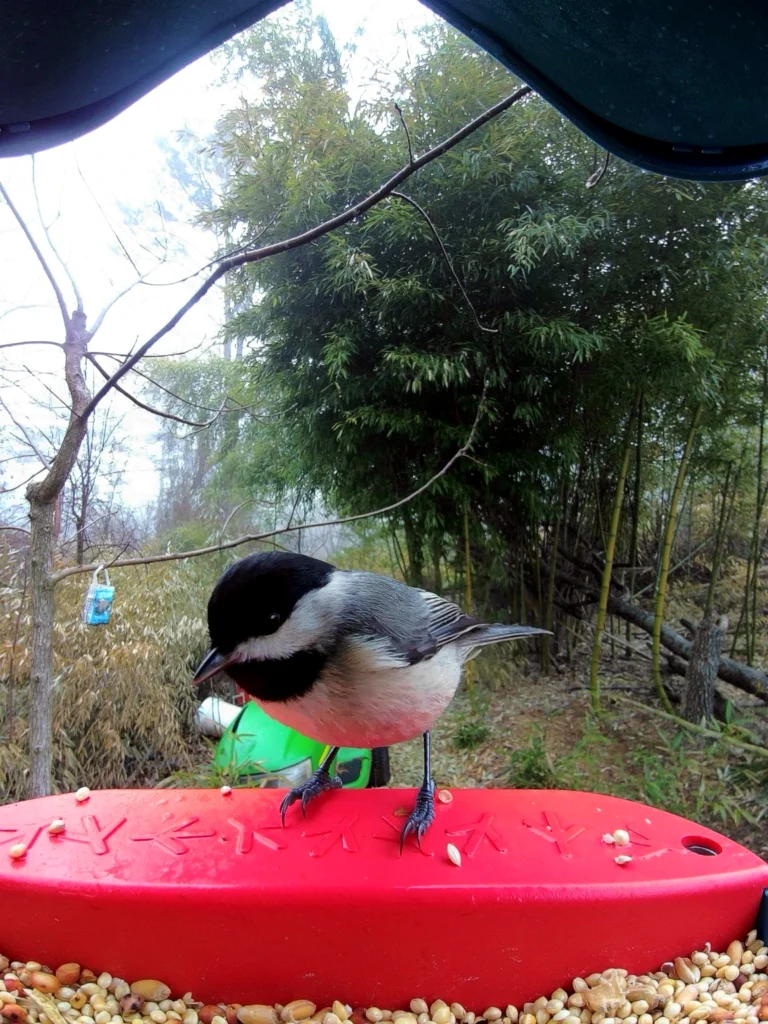
How to Identify a Carolina Chickadee
The Carolina Chickadee is a very small songbird with a round head, short neck, and compact body. Its most obvious field marks are the black cap and black bib, set against white cheeks. The back and wings are gray, while the underparts are pale and softly buffy along the sides. The bill is short and pointed.
This species looks similar to the Black-capped Chickadee, but the Carolina Chickadee is the expected chickadee across most of the Southeast, including Arkansas. Its voice is also helpful for identification, especially the familiar chick-a-dee-dee-dee call and a clear whistled song.
Range and Habitat
Carolina Chickadees live year-round across the southeastern United States. They are found in deciduous woods, mixed woods, swamps, riparian areas, parks, suburban yards, and other places with trees and shrubs. They adapt well to people, which is why they are such regular feeder birds.
They are especially common where mature trees, brushy edges, and some nearby cover give them places to forage, hide, and nest.
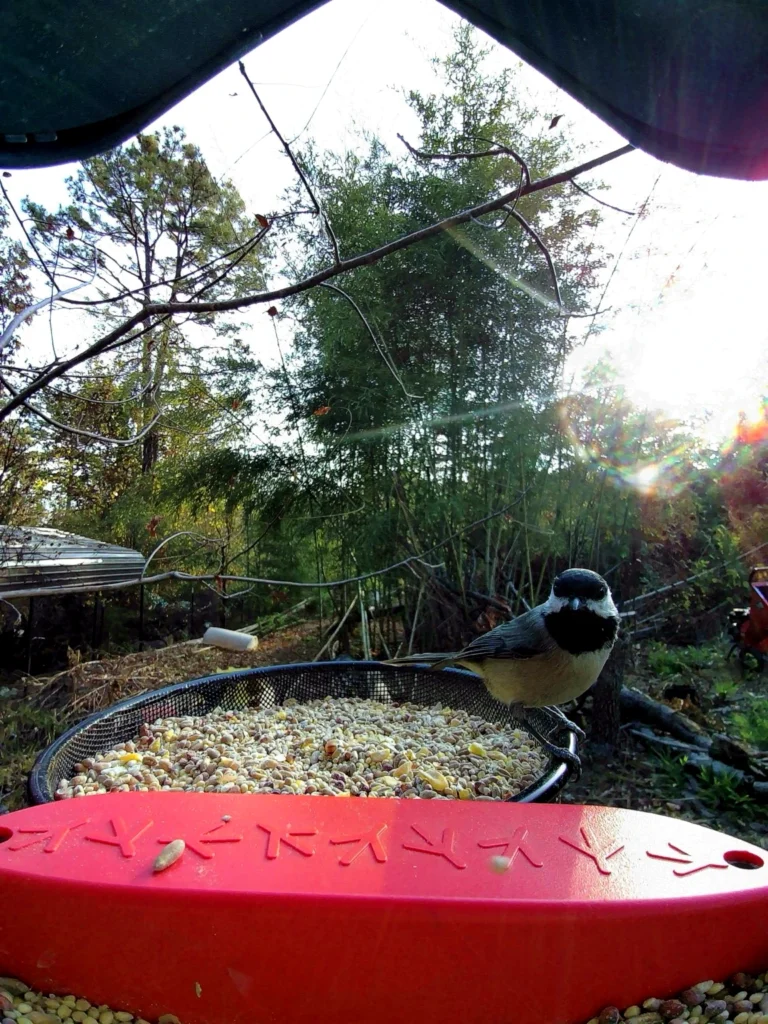
Diet and Feeding Behavior
For much of the year, Carolina Chickadees eat mostly insects and spiders. They search leaves, twigs, and bark for small prey, sometimes hanging upside down while they feed. In winter they rely more heavily on seeds and other plant foods.
At backyard feeders they regularly take sunflower seeds, peanut pieces, and suet. Like many chickadees, they often grab a seed and carry it away to eat at a more sheltered perch. They may also cache food for later.
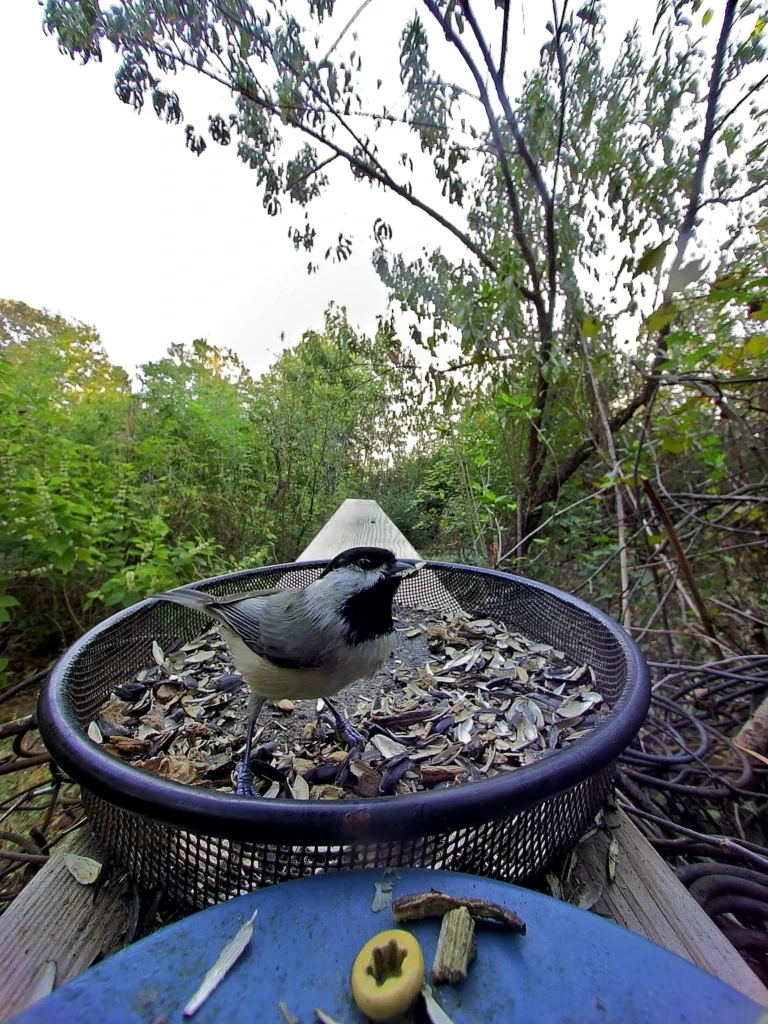
Nesting and Breeding
Carolina Chickadees nest in cavities. They may excavate a soft or rotten cavity themselves, use an existing hole, or accept a nest box. Nests are usually placed a few feet to a few yards above the ground. The female builds the nest with moss, bark strips, hair, and plant fibers.
During the nonbreeding season, Carolina Chickadees often travel in small flocks. These flocks may include Tufted Titmice, nuthatches, kinglets, and woodpeckers, making chickadees an excellent bird to watch if you want to notice other species moving through the same area.
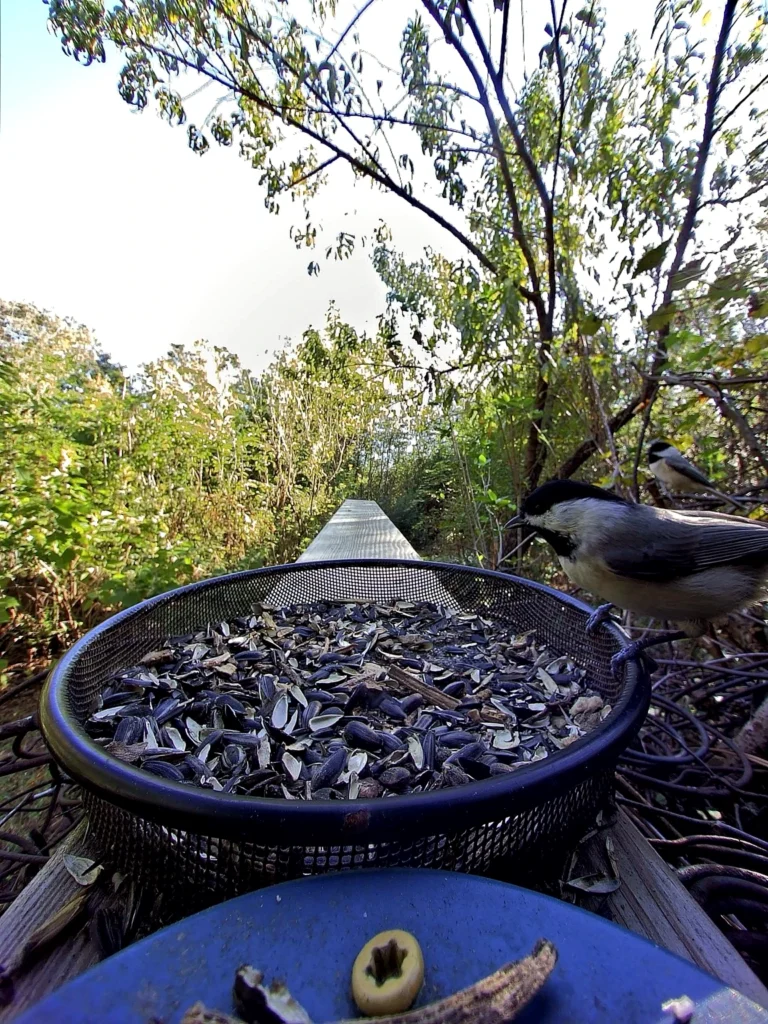
Backyard Feeding Tips
- Offer black oil sunflower seeds, peanut chips, or suet for the best chance of attracting Carolina Chickadees.
- Provide nearby shrubs, brush, or small trees so birds can move safely to and from the feeder.
- Keep feeders clean and dry, especially when offering peanuts or seed mixes.
- Consider adding a small nest box if you want to support breeding birds in spring.
Quick Facts
- Common name: Carolina Chickadee
- Scientific name: Poecile carolinensis
- Family: Paridae
- Length: About 3.9 to 4.7 inches
- Wingspan: About 5.9 to 7.9 inches
- Main foods: Insects, spiders, seeds, and berries
- Nest type: Cavity nest
- Backyard appeal: Very common feeder visitor
Sources
- Cornell Lab of Ornithology, All About Birds – Carolina Chickadee Overview
- Cornell Lab of Ornithology, All About Birds – Carolina Chickadee Life History
Photographs © Daniel Garber / MyGarlix.com. All rights reserved.