
Species: Blue Jay (Cyanocitta cristata) · Family: Corvidae
With its bold blue plumage, pointed crest, and unmistakable calls, the Blue Jay is one of the most familiar birds of eastern North America. It is also a member of the crow family, a group known for flexible feeding habits and complex social behavior. Blue Jays may be noisy and conspicuous around food, yet they can be surprisingly quiet near their nests.
At a glance: Length 9.8–11.8 in (25–30 cm) · Wingspan 13.4–16.9 in (34–43 cm) · Range: eastern and central North America · Arkansas: year-round resident and seasonal movements · Diet: omnivore
How to identify a Blue Jay
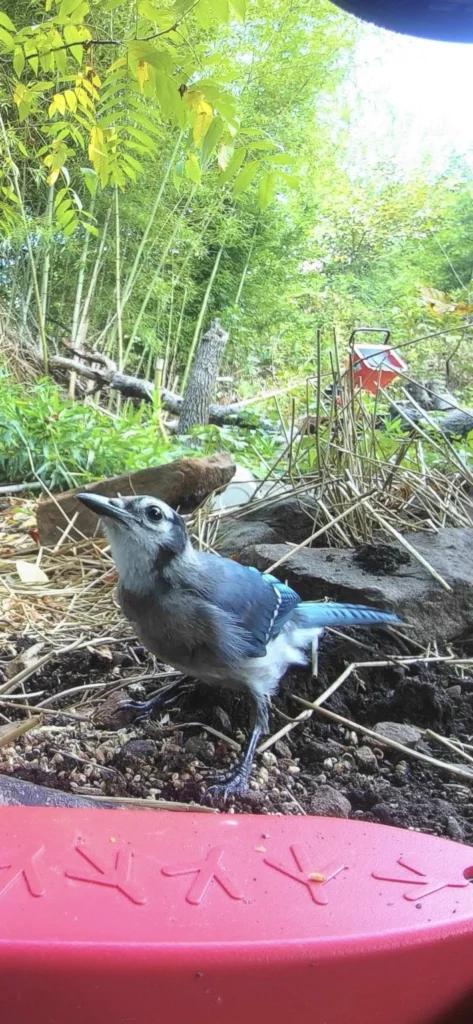
A Blue Jay is a fairly large songbird, about 9.8–11.8 inches (25–30 cm) long, with a wingspan of 13.4–16.9 inches (34–43 cm). It has a sturdy bill, a noticeable crest, and a long, rounded tail. Its upperparts are blue, while its underside is pale gray to white. Look for the black collar around its throat and the black-and-white barring on its wings and tail.
Males and females have nearly identical plumage. The crest can be raised or lowered, making the same bird look quite different from one moment to the next.
The vivid blue is an optical effect. Microscopic structures in the feathers scatter light, producing blue even though the feathers do not contain blue pigment.

Where Blue Jays live
Blue Jays live throughout much of eastern and central North America. They are especially common along forest edges, in mixed or deciduous woodlands, and in neighborhoods with mature trees. Oak trees are particularly valuable because acorns are an important food source.
In Arkansas, Blue Jays are present year-round. Some individuals migrate, while others stay in one area, and the reasons behind these different patterns are still being studied.
What Blue Jays eat
Blue Jays are omnivores. Their diet includes acorns, other nuts, seeds, grains, berries, fruit, insects, and other small invertebrates. They sometimes eat eggs or nestlings, but that behavior represents a small portion of their overall diet according to studies summarized by Cornell.
These birds are skilled at storing food. A jay may carry acorns away and hide them in the soil or leaf litter to eat later. Acorns that remain buried can germinate, helping oak trees spread.
Calls, intelligence, and behavior
The loud “jay, jay” call is easy to recognize, but Blue Jays have a much larger repertoire of rattles, whistles, and softer sounds. They can imitate certain hawks, including the Red-shouldered Hawk. The reason for these imitations is not always clear.
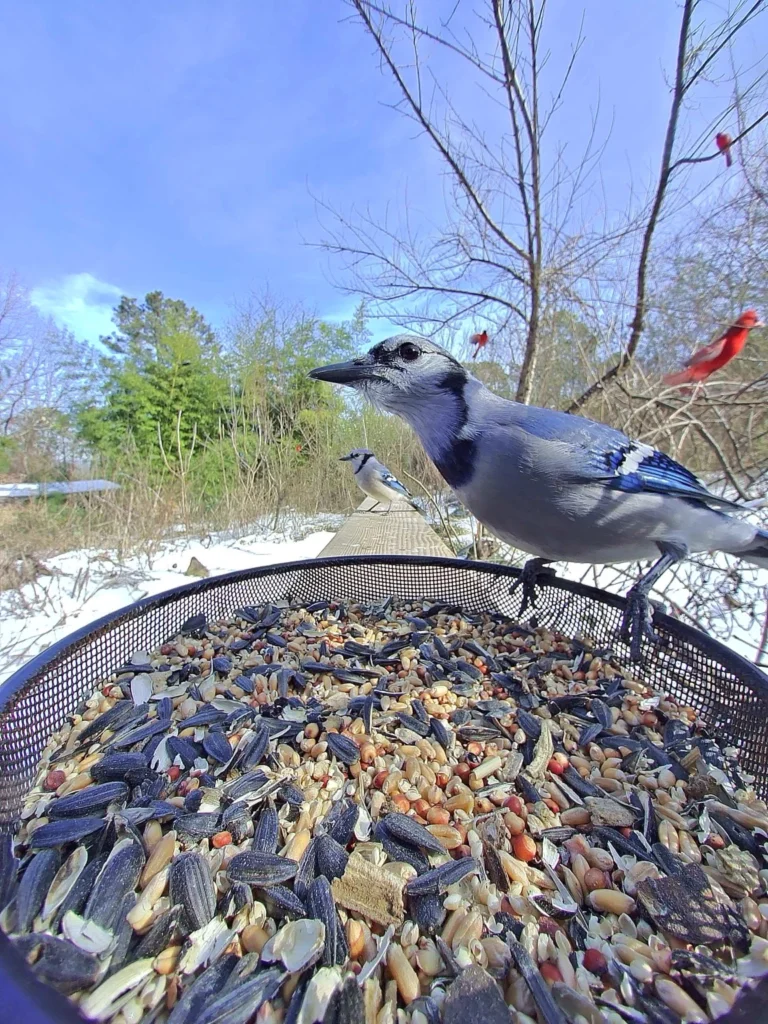
Blue Jays may gather and call when a predator is nearby. They also form strong social bonds and use both their voices and crest positions to communicate. At feeders, their size and assertive manner can make them seem dominant, although other birds and even squirrels sometimes displace them.
Nesting and raising young
Blue Jays build open cup-shaped nests from twigs, grasses, rootlets, and sometimes mud. Nest sites are often in the fork of a tree, roughly 10–25 feet above the ground, though placement varies.
A clutch usually contains 2–7 eggs. Incubation lasts approximately 17–18 days, and the young typically remain in the nest for another 17–21 days. Both parents contribute to caring for their offspring, and fledglings may continue receiving food for weeks after leaving the nest.
How to attract Blue Jays to your backyard
A roomy platform feeder or sturdy hopper feeder is often a good match for a Blue Jay. Foods they readily take include unsalted peanuts, black oil sunflower seeds, and suet. Offer fresh water in a birdbath, and keep mature trees and shrubs available for cover.
For a longer-term habitat improvement, consider planting appropriate native oaks. They provide acorns and support the insects many woodland birds rely on.
Keep feeding stations hygienic. Cornell Project FeederWatch recommends washing seed and suet feeders approximately every week or two, and more often during wet weather or heavy use. Remove spoiled seed and hulls, and rinse and dry feeders thoroughly before refilling.
Five quick Blue Jay facts
- Blue Jays belong to the crow and raven family, Corvidae.
- Their blue appearance comes from light-scattering feather structures.
- They cache acorns and can help new oak trees establish.
- Their calls can include convincing imitations of hawks.
- Some Blue Jays migrate while others remain in place year-round.
Sources & further reading
- Cornell Lab of Ornithology, Blue Jay Identification
- Cornell Lab of Ornithology, Blue Jay Life History
- National Audubon Society, Blue Jay Field Guide
- Cornell Project FeederWatch, How to Clean Your Feeders
THE MYGARLIX BIRD COLLECTION
Love the Blue Jay?
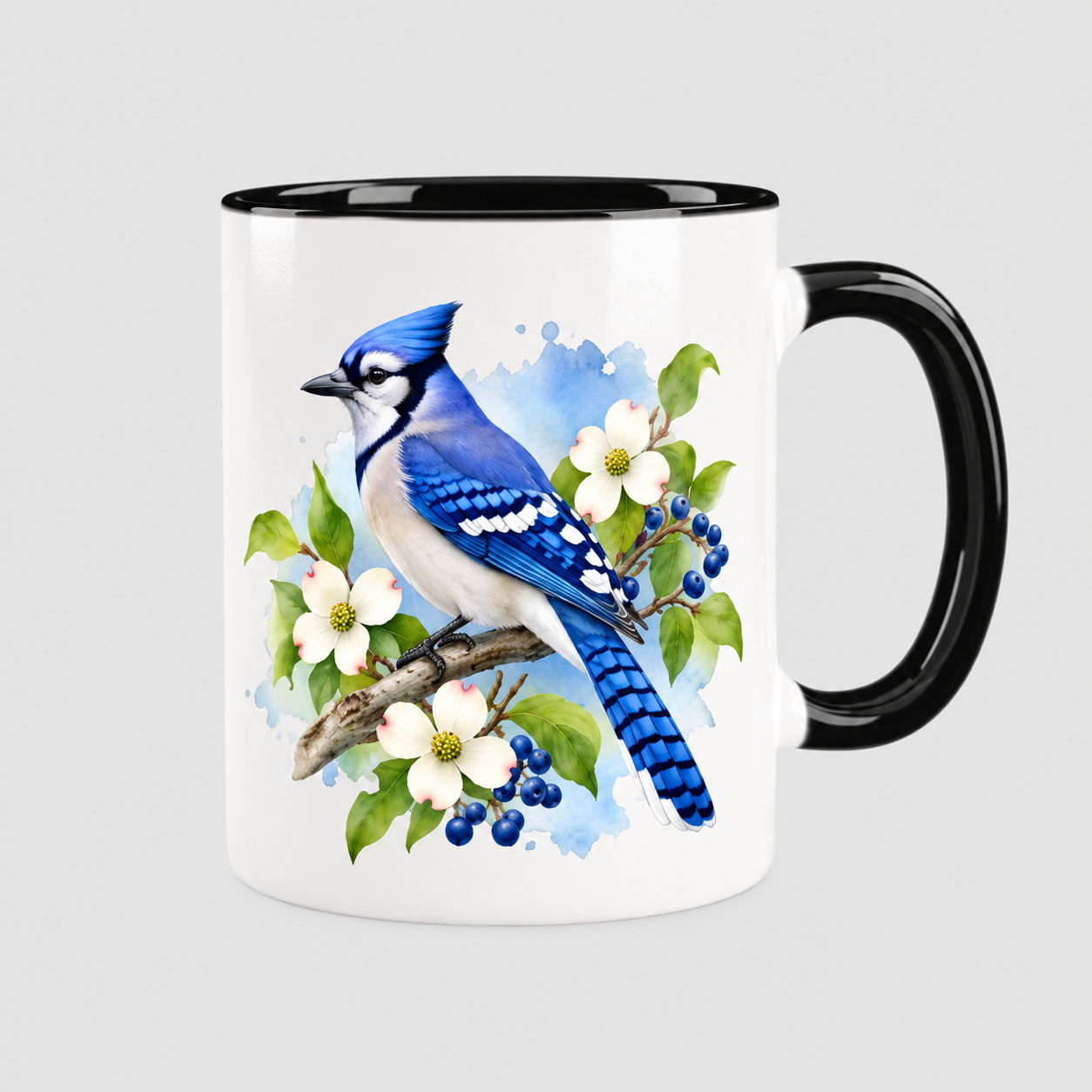
Bring this beautiful backyard bird to your morning coffee with our watercolor-inspired ceramic mug.
11 oz Ceramic Mug · $19.95
View the Blue Jay Mug →Photographs © Daniel Garber / MyGarlix.com. All rights reserved.